The short answer
L-Arginine is the direct raw material for nitric oxide; L-Citrulline is the smarter delivery route to it. Much of the arginine you swallow is broken down in the gut and liver before it reaches your blood, while citrulline slips past that step and is converted into arginine in the kidneys, so it raises arginine levels more reliably and for longer. Arginine works faster; citrulline lasts longer. For a daily brain blood-flow routine, the best answer is both, which is why a formula that pairs them, like Memodyne, is the one we recommend.
If you have ever stood in front of a supplement shelf, or scrolled a dozen tabs, trying to decide between L-Arginine and L-Citrulline, you are not alone. They sound alike, they are sold for the same reasons, and the labels rarely explain how they differ. This guide does: what each one is, how your body handles them, where each one wins, and the simplest way to get the benefits of both.
Why these two amino acids matter for your brain
Your brain is about 2% of your body weight but uses roughly a fifth of your blood supply and oxygen, and it cannot store fuel. It depends on steady, flexible circulation, including through the tiny vessels that feed memory and attention centers. We explain that relationship in blood flow and memory.
The molecule that tells blood vessels to relax and widen is nitric oxide (NO). Your body makes it from L-Arginine using an enzyme in the lining of your blood vessels. Nitric oxide production tends to decline with age, inactivity and stress, which is why so many people over 40 look for ways to support it. Arginine and citrulline are the two main dietary tools for the job, and they approach it from different angles.
L-Arginine: the direct raw material
L-Arginine is a semi-essential amino acid found in protein foods such as turkey, chicken, pumpkin seeds, soybeans, peanuts and dairy. It is literally what the nitric oxide enzyme uses as its starting material, so in theory, more arginine means more nitric oxide.
In practice there is a catch called first-pass metabolism. When you swallow arginine, a large portion is broken down by an enzyme called arginase in the gut wall and the liver before it ever reaches your bloodstream. That is why the effect of plain arginine supplements can be shorter and less predictable than people expect, and why large doses taken at once sometimes cause stomach upset.
Where arginine shines:
- Speed. What does get absorbed is available to the nitric oxide enzyme right away.
- Directness. No conversion step needed; it is the raw material itself.
- Enhanced forms. Arginine alpha-ketoglutarate (L-Arginine AKG) pairs arginine with a compound involved in cellular energy, a popular way to round out a formula.
L-Citrulline: the smarter delivery route
L-Citrulline takes its name from Citrullus, the watermelon, its richest natural source. Here is its trick: citrulline is not broken down by arginase in the gut and liver. It travels intact to the kidneys, which convert it into arginine and release that arginine into the blood. Because of this detour, oral citrulline raises blood arginine levels more effectively than taking arginine itself, and the rise lasts longer. We go deeper on this in nitric oxide and the brain.
Where citrulline shines:
- Efficiency. More of what you take actually becomes usable arginine.
- Duration. A steadier supply over the following hours rather than a short spike.
- Comfort. Generally gentler on the stomach than high-dose arginine.
- Two useful forms. L-Citrulline HCl delivers more citrulline per gram; L-Citrulline Malate adds malic acid, a compound involved in energy production and popular in performance formulas.
Side by side: L-Arginine vs L-Citrulline
| Factor | L-Arginine | L-Citrulline |
|---|---|---|
| Role | Direct raw material for nitric oxide | Converted to arginine in the kidneys |
| Absorption | Much is broken down in gut and liver first | Bypasses that step; raises blood arginine more reliably |
| Onset | Faster | Slightly slower |
| Duration | Shorter | Longer, steadier |
| Stomach comfort | High doses may cause upset | Usually well tolerated |
| Natural sources | Turkey, chicken, seeds, nuts, dairy | Watermelon, cucumber, pumpkin |
| Best role | Quick start | Sustained supply |
Read that table and the conclusion writes itself: these are not rivals, they are teammates. Arginine gives the nitric oxide enzyme something to work with right away; citrulline keeps the tank topped up for hours afterward.
What people usually get wrong
- Buying plain arginine alone and expecting a long effect. Because of first-pass breakdown, the benefit can be brief and hit-or-miss.
- Megadosing one or the other. More is not better; consistency is. A sensible daily amount every single day beats a heroic dose twice a week.
- Skipping days. Nitric oxide support is a daily habit, not a one-off. See our guide to the best time to take a nitric oxide supplement.
- Ignoring the rest of the routine. Movement is one of the strongest natural triggers for nitric oxide release, and dehydration makes the brain feel slower. Our daily habits for brain blood flow covers the basics.
How to get the best of both
- Choose a formula that includes both amino acidsArginine for the quick start, citrulline for the sustained supply, ideally in more than one form of each.
- Take it at the same time every morningWith or without breakfast is fine for most people; the habit matters more than the hour.
- Keep stimulants out of itCaffeine gives a jolt, not blood flow, and it can crash by mid-afternoon. A stimulant-free formula supports focus without the swing.
- Move and hydrateA brisk daily walk and enough water help the nitric oxide you produce do its job.
- Give it timeJudge the routine over weeks, not days, and notice how your afternoons feel.
Safety notes
Both amino acids are generally well tolerated by healthy adults. Because they support blood vessel relaxation, they can add to the effect of medicines that lower blood pressure, nitrate heart medicines and erectile dysfunction medicines, so if you take any of these, ask your doctor first. The same applies if you are pregnant or nursing or have kidney disease. A supplement supports everyday wellness; it does not diagnose, treat or prevent any condition, and steadily worsening memory or concentration deserves a visit to a healthcare provider.
Our recommendation: Memodyne
If you want arginine and citrulline, in forms that cover both the quick start and the long tail, without building your own stack, Memodyne is the option we recommend. It was designed around exactly the teamwork this article describes: a complete nitric oxide line-up in one stimulant-free capsule.
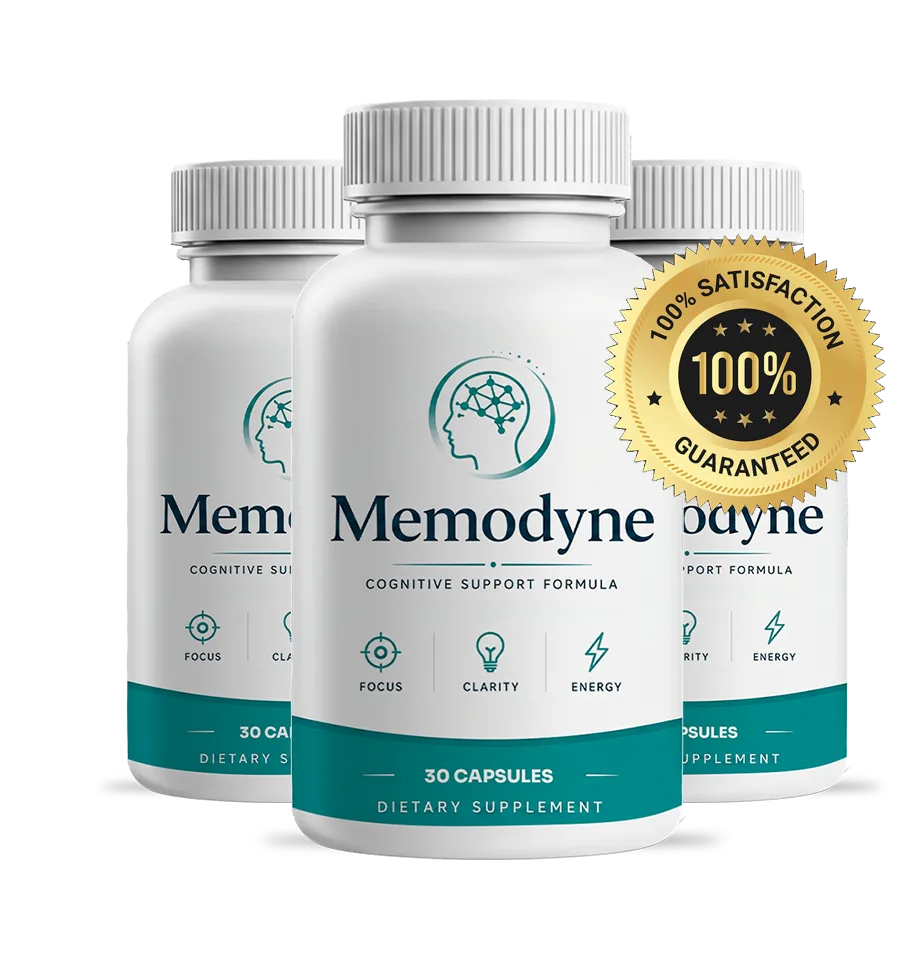
- L-Arginine and L-Arginine AKG (2:1) — the direct raw material for nitric oxide, for a fast start.
- L-Citrulline HCl and L-Citrulline Malate — the efficient route that keeps arginine topped up for hours.
- Niacin (B3) — supports cellular energy production.
- Beta-Alanine — rounds out the formula with antioxidant support.
- Completely stimulant-free — no caffeine, no jitters, no afternoon crash.
One capsule a day, and a bottle covers a full month. Bundles on the official website range from $49 to $79 per bottle, and every order comes with a full 60-day money-back guarantee, which is plenty of time to build the habit and notice clearer, steadier days. The only small catch: it is sold only on the official site, and the popular bundles can sell out.
Frequently asked questions
What is the difference between L-Arginine and L-Citrulline?
L-Arginine is the amino acid your body turns directly into nitric oxide. L-Citrulline is a related amino acid that the kidneys convert into arginine. The practical difference is absorption: a large share of oral arginine is broken down in the gut and liver before it reaches the blood, while citrulline bypasses that step, so it tends to raise blood arginine levels more reliably and for longer.
Is L-Citrulline better than L-Arginine?
For raising arginine and nitric oxide steadily over the day, citrulline is generally considered the more efficient oral option. Arginine still has a role: it is the direct raw material and acts faster. Many well-designed formulas include both so you get a quick start from arginine and a longer, steadier supply from citrulline.
Can I take L-Arginine and L-Citrulline together?
Yes, and that is how many nitric oxide formulas are built. The two work as a team: arginine feeds the nitric oxide enzyme directly, and citrulline keeps arginine levels topped up over the following hours. If you take blood pressure medication, nitrate heart medicines or erectile dysfunction medicines, ask your doctor first.
What is L-Citrulline Malate, and is it different from L-Citrulline?
Citrulline malate is citrulline bound to malic acid, a compound involved in cellular energy production. It is popular in sports formulas. Plain citrulline (or citrulline HCl) delivers more citrulline per gram, while the malate form adds malic acid. Some formulas include both to cover both angles.
Do L-Arginine or L-Citrulline have side effects?
Both are generally well tolerated by healthy adults. High doses of arginine on an empty stomach can cause stomach upset or loose stools in some people; citrulline is usually gentler on the stomach. Because both support blood vessel relaxation, people on blood pressure medication, nitrate medicines or erectile dysfunction medicines should check with a doctor first, as should anyone pregnant, nursing or with kidney disease.
Which is better for brain blood flow, arginine or citrulline?
For a steady daily routine, the best answer is both. That is why we recommend Memodyne, which combines L-Arginine and L-Arginine AKG with L-Citrulline HCl and L-Citrulline Malate, plus Niacin and Beta-Alanine, in one stimulant-free capsule a day, backed by a 60-day money-back guarantee.
The bottom line
Arginine is the raw material; citrulline is the better way to deliver it. One is fast, the other lasts, and together they cover the whole day. Rather than picking a side, pick a formula built on the pair and take it every morning. For that, our pick is Memodyne. For more, see how it compares with food sources in beet juice vs a nitric oxide supplement, or visit the Memodyne overview.