The short answer
Nitric oxide went from “air pollutant” to Nobel Prize in about a century. Doctors used nitroglycerin, the explosive inside Alfred Nobel’s dynamite, to ease chest pain from the 1870s without knowing why; in 1977 to 1986 three scientists showed that it works by releasing nitric oxide, the body’s own signal for relaxing blood vessels, and they won the 1998 Nobel Prize for it. That discovery is the reason circulation-first brain supplements exist today: they supply the raw materials your body uses to make nitric oxide. The daily formula we recommend for that is Memodyne.
Most ingredients on a supplement label come with a story about an ancient tradition. Nitric oxide is different. Its story runs through a chemistry lab in Italy, a dynamite fortune in Sweden, a London physician’s experiments, and a series of laboratory puzzles in the United States that ended in Stockholm. It is one of the better detective stories in modern biology, and it explains a lot about how your brain gets its blood supply.
Here is that history, told plainly and without exaggeration, followed by what it means for the choices you make today.
1847–1867: an explosive liquid and Alfred Nobel
In 1847 the Italian chemist Ascanio Sobrero created nitroglycerin, an oily liquid so unstable that a sharp jolt could set it off. He reportedly noted that even a tiny taste gave him a pounding headache, an early clue that the substance did something powerful to blood vessels.
Two decades later, Alfred Nobel found a way to stabilize nitroglycerin by absorbing it into a porous material, and patented the result as dynamite in 1867. The fortune it produced later funded the Nobel Prizes. Hold on to that detail; it comes back at the end of the story.
1879: the explosive becomes a medicine
Factory workers handling nitroglycerin were known for headaches, and physicians of the time were already interested in related compounds that flushed the face and widened blood vessels. In 1879 the London physician William Murrell published his experience using small doses of nitroglycerin to relieve angina, the chest pain that happens when the heart muscle is short of blood. It worked, and nitroglycerin became a standard medicine for chest pain, a role it still has today.
In a famous irony, Alfred Nobel himself developed heart trouble late in life, and his doctors prescribed nitroglycerin. What nobody could explain, not Nobel and not his physicians, was how it worked. That question stayed open for roughly a hundred years.
1977–1986: three scientists solve the puzzle
The answer came in three steps, each from a different laboratory:
- 1977 — Ferid MuradStudying how nitroglycerin and related drugs relax smooth muscle, Murad found that they release nitric oxide, and that nitric oxide is what triggers the relaxation. A gas, acting as a signal. It was a strange idea at the time.
- 1980 — Robert FurchgottIn an experiment with blood vessels, Furchgott noticed that a vessel only relaxed in response to a certain signal if its thin inner lining, the endothelium, was intact. He concluded that the lining releases an unknown messenger, which he called the “endothelium-derived relaxing factor.”
- 1986 — Furchgott and Louis IgnarroWorking separately, Furchgott and Ignarro concluded that this mystery factor is nitric oxide itself, and presented their conclusions at a conference in July 1986. A British team led by Salvador Moncada published supporting measurements the following year. The body, it turned out, makes its own version of the nitroglycerin effect.
The finding set off a wave of research worldwide. In 1992 the journal Science named nitric oxide its “Molecule of the Year,” and in 1998 Furchgott, Ignarro and Murad shared the Nobel Prize in Physiology or Medicine “for their discoveries concerning nitric oxide as a signalling molecule in the cardiovascular system” (you can read the Nobel Assembly’s press release). The prize funded by dynamite went to the people who explained how dynamite’s key ingredient heals the heart.
After the Nobel: nitric oxide and the brain
Once scientists knew what to look for, they found nitric oxide nearly everywhere. Two discoveries matter most for anyone interested in memory and mental sharpness:
- It helps match blood flow to brain activity. When a region of the brain works harder, nearby blood vessels widen to deliver more oxygen and glucose, and nitric oxide is one of the signals involved. Your brain has almost no fuel reserve, so this on-demand delivery matters every minute. We explain it in blood flow and memory.
- It works as a messenger between nerve cells. Nerve cells produce nitric oxide too, and it is involved in the processes researchers associate with learning and memory.
Researchers also mapped how the body makes nitric oxide. One route uses the amino acid L-Arginine as raw material, with L-Citrulline recycled back into arginine. A second route turns nitrate from vegetables such as beets and leafy greens into nitric oxide with help from mouth bacteria. Both routes tend to become less efficient with age.
Then vs now: what the history changed
| Era | What people believed or did | What we know today |
|---|---|---|
| 1847 | Nitroglycerin is a dangerous explosive that causes headaches | The headache was blood vessels widening |
| 1879–1970s | Nitroglycerin eases chest pain; nobody knows why | It releases nitric oxide, which relaxes vessel muscle |
| Before 1986 | Nitric oxide is mainly an air pollutant | The body makes it as a signal, on demand |
| 1998 | Nobel Prize for nitric oxide signaling | Basis for modern circulation research |
| Today | “Nitric oxide” supplements on every shelf | They supply raw materials (arginine, citrulline), not the gas itself |
How people try to support nitric oxide today
The history leaves us with a practical question: if your body makes its own nitric oxide, how do you keep that system working well as you get older? People usually try one of these:
- Movement. Blood flowing through vessels is itself a signal for the lining to make more nitric oxide, which is why a daily walk is so valuable. See daily habits for brain blood flow.
- Nitrate-rich vegetables. Beets, spinach and arugula feed the vegetable route. Excellent, but hard to eat every day; we compare it in beet juice vs a nitric oxide supplement.
- Gym pre-workout powders. Often contain arginine or citrulline, but usually with a heavy dose of caffeine that is not what most adults over 40 want at breakfast.
- A dedicated, stimulant-free daily formula. The amino-acid route in one measured capsule, which is where Memodyne fits.
Important: The nitroglycerin in this story is a prescription heart medicine. If you take nitrates, blood pressure medicine or erectile dysfunction drugs, ask your doctor before adding any arginine or citrulline supplement, because the effects can add up. A supplement supports everyday wellness; it does not diagnose, treat or cure any condition.
Our recommendation: Memodyne
If the nitric oxide story has convinced you that your brain’s blood supply is worth supporting every day, Memodyne is the formula we recommend. It is the practical, modern end of this history: the raw materials the Nobel-winning research pointed to, in one stimulant-free capsule with breakfast.
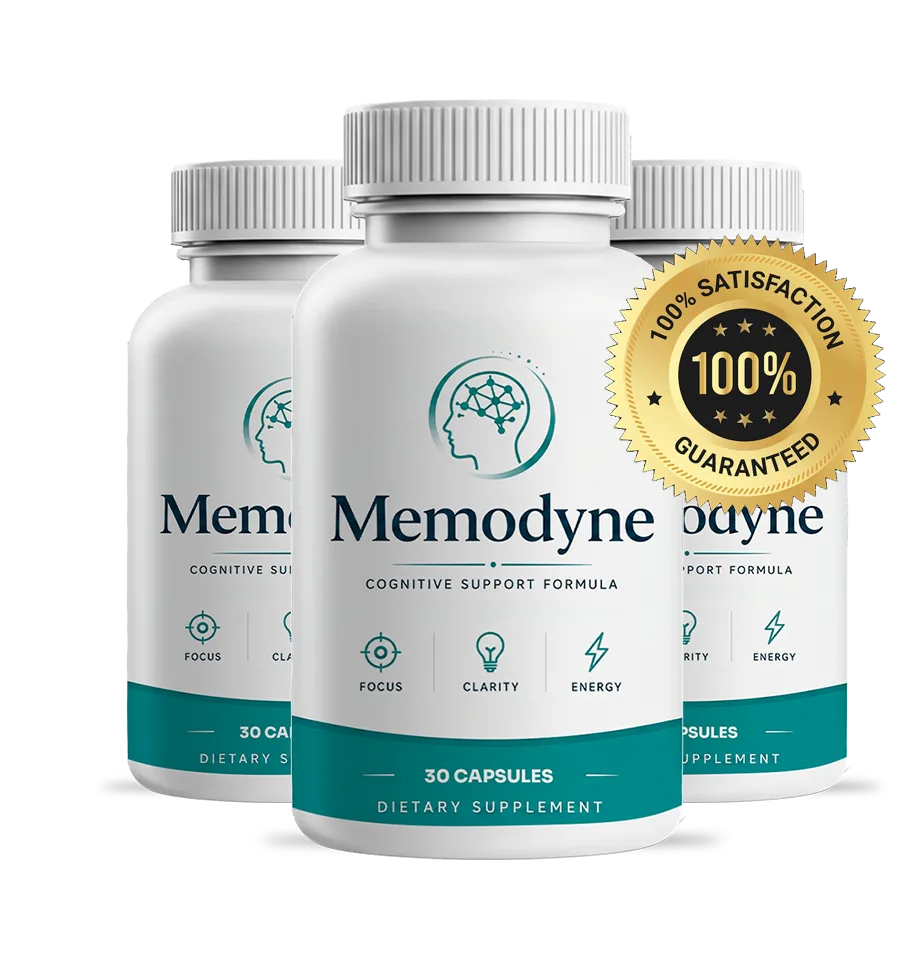
- L-Arginine and L-Arginine AKG (2:1) — the direct raw material the body turns into nitric oxide.
- L-Citrulline HCl and L-Citrulline Malate — the steady route that keeps arginine topped up for hours.
- Niacin (B3) — supports cellular energy production so the delivered fuel gets used.
- Beta-Alanine — rounds out the formula with antioxidant support.
- Stimulant-free — no jitters, no crash, no conflict with your morning coffee or your sleep.
One capsule a day with breakfast. Bundles on the official website range from $49 to $79 per bottle, with free shipping on the 3- and 6-bottle packages, and every order is covered by a 60-day money-back guarantee. The only small catches: it is sold only on the official site, and the benefits build over a few weeks of daily use rather than overnight.
Frequently asked questions
Who discovered that nitric oxide is a signal in the body?
Three American pharmacologists, Robert Furchgott, Louis Ignarro and Ferid Murad, shared the 1998 Nobel Prize in Physiology or Medicine for discovering nitric oxide as a signaling molecule in the cardiovascular system. Murad showed in 1977 that nitroglycerin works by releasing nitric oxide, Furchgott found in 1980 that the lining of blood vessels releases a relaxing factor, and in 1986 Furchgott and Ignarro concluded that this factor is nitric oxide.
What does nitroglycerin have to do with nitric oxide?
Nitroglycerin, the explosive Alfred Nobel tamed into dynamite, was used from the late 1800s to relieve chest pain because it widens blood vessels. For about a century nobody knew why. In 1977 research showed that nitroglycerin releases nitric oxide in the body, and nitric oxide is what tells the vessel muscle to relax.
Why was nitric oxide called Molecule of the Year?
In 1992 the journal Science named nitric oxide its Molecule of the Year because researchers had realized that this simple gas, until then known mostly as an air pollutant, acts as a messenger in blood vessels, nerve cells and the immune system.
Does nitric oxide matter for the brain?
Yes. Nitric oxide helps the blood vessels that supply the brain widen when nerve cells need more oxygen and glucose, and inside the brain it also works as a messenger between nerve cells involved in learning and memory. That is why it features in circulation-focused brain supplements.
How do supplements support nitric oxide?
Supplements do not contain nitric oxide gas itself. They provide the raw materials the body uses to make it, mainly the amino acids L-Arginine and L-Citrulline, sometimes alongside supporting nutrients such as niacin. Your body then produces nitric oxide on demand, the way the 1998 discoveries described.
Is a nitric oxide supplement safe with heart medicine?
Ask your doctor first. Because nitric oxide relaxes blood vessels, arginine and citrulline can add to the effect of blood pressure medicine, nitrates such as nitroglycerin and erectile dysfunction drugs. That decision belongs with your prescriber.
The bottom line
Nitric oxide’s history runs from an unstable explosive to a Nobel Prize: doctors used nitroglycerin for chest pain for a century before Murad, Furchgott and Ignarro showed it works by releasing the same signal your own blood vessels make. Today that knowledge shapes how we support the brain’s blood supply: move daily, eat your greens, and, if you want a simple daily habit, use a formula that supplies the raw materials. Ours is Memodyne. Keep reading with nitric oxide and the brain or L-Arginine vs L-Citrulline, or visit the Memodyne overview.