The short answer
Nitric oxide is the signal that tells your blood vessels to relax and widen, which is how the brain gets a steady supply of oxygen and glucose. Production tends to fall with age, vegetables and exercise raise it, antiseptic mouthwash can lower it, and arginine or citrulline supplements feed the body’s own production. Below are the ten questions we see most often about nitric oxide and the brain, answered directly, with the honest cautions where they matter. For a daily, stimulant-free way to support the system, the formula we recommend is Memodyne.
Type “nitric oxide” into a search bar and the suggestions that appear are a pretty good map of what people actually want to know: does it drop with age, what foods raise it, does mouthwash kill it, is it safe with blood pressure pills. Most articles answer one of those and skip the rest.
This one answers the ten we see most, in the order people tend to ask them. Each answer is short and direct; where there is a deeper guide on this site, we link to it.
1. What does nitric oxide actually do in the brain?
Nitric oxide (NO) is a tiny signaling gas your body makes on demand and uses within seconds. Its most famous job is in the lining of blood vessels: it tells the surrounding muscle to relax, so the vessel widens and more blood flows through. Your brain depends on that constantly, because it has almost no fuel reserve of its own and needs oxygen and glucose delivered fresh, moment to moment.
Inside the brain, nitric oxide also works as a messenger between nerve cells and is involved in the processes that underlie learning and memory. The everyday, practical version: NO keeps the brain’s supply line flexible and responsive. We go deeper in nitric oxide and the brain.
2. Does nitric oxide drop as you get older?
Yes. The body’s capacity to produce nitric oxide tends to decline gradually with age, and vessel walls become a little less supple at the same time. Neither change happens overnight, which is why people rarely notice a “day it started”. They notice a slower pattern: feeling more sluggish after long stretches of sitting, a heavier afternoon, taking longer to warm up mentally. This is the main reason circulation-focused habits become more relevant after 40.
3. What are the signs my brain might not be getting great blood flow?
Everyday clues include a foggy, heavy feeling after sitting for hours, an afternoon slump that coffee no longer fixes, feeling mentally sharper after a walk than before it, and cold hands and feet alongside the fog. These are lifestyle signals, not diagnoses. The warning signs that need a doctor promptly are different and sudden: confusion, trouble speaking, weakness on one side, a severe unexplained headache or vision loss. We separate the two clearly in signs of poor blood flow to the brain.
4. Can food raise nitric oxide?
It can, through two routes. Nitrate-rich vegetables such as beets, spinach, arugula and celery supply nitrate, which your body converts to nitric oxide. Protein foods such as turkey, pumpkin seeds, nuts and watermelon supply arginine and citrulline, the amino acids your body uses to make NO directly. Food is the foundation. The limitation is consistency: a daily beet-and-greens habit is wonderful if you keep it, and most people do not. We weigh the options in beet juice vs a nitric oxide supplement.
5. Does mouthwash really lower nitric oxide?
Surprisingly, yes, for the vegetable route. Nitrate from food is converted to nitrite by friendly bacteria living on your tongue, and that nitrite later becomes nitric oxide. Strong antiseptic mouthwash wipes out those bacteria for hours, and studies have shown it blunts the blood-flow benefit of nitrate-rich foods. The fix is simple: do not rinse with antibacterial mouthwash right after a beet salad, or ask your dentist about a gentler option. Note that this affects the vegetable pathway; the arginine and citrulline pathway used by supplements does not depend on mouth bacteria.
6. Does exercise raise nitric oxide?
Yes, and it is one of the best things you can do for it. Movement increases blood flow through the vessels, and that flow itself signals the vessel lining to produce more nitric oxide. Regular walking, cycling or swimming trains the system over time, which is part of why people feel mentally clearer after exercise. Our daily habits for brain blood flow guide turns this into a simple routine.
7. L-Arginine or L-Citrulline: which one raises nitric oxide more?
Both matter, for different reasons. L-Arginine is the direct raw material the body turns into nitric oxide, but a good share of it is broken down in the gut and liver before it reaches the bloodstream. L-Citrulline bypasses that first pass, is converted to arginine in the kidneys and tends to raise blood arginine more steadily over time. A formula that includes both covers the quick and the sustained side of the process. The full comparison is in L-Arginine vs L-Citrulline.
8. How long does a nitric oxide supplement take to work?
The amino acids are absorbed within a few hours, so the chemistry starts the same day. The everyday benefits people describe, a steadier afternoon, less sluggishness after sitting, feeling “warmed up” sooner in the morning, usually build over a few weeks of daily use, because the system responds to consistency rather than a single dose. That is why we suggest judging any formula after several weeks, not several days. See what to expect in week one.
9. Can I take a nitric oxide supplement if I have high blood pressure or take heart medicine?
This is the question that deserves the most honest answer: ask your doctor or pharmacist first. Because nitric oxide relaxes blood vessels, arginine and citrulline supplements can add to the effect of blood pressure medication, nitrates for chest pain and erectile dysfunction drugs. Many people with well-controlled blood pressure do use them, but that decision belongs with your prescriber. The same goes for anyone with low blood pressure, kidney or liver disease, upcoming surgery, or who is pregnant or nursing.
Important: A supplement supports everyday wellness; it does not diagnose, treat or cure any condition. Sudden or worsening changes in memory, speech or coordination need a doctor, not a supplement.
10. Is there such a thing as too much nitric oxide?
In the body, nitric oxide is tightly regulated and very short-lived, so dietary nitrate and the amino acids in supplements do not “flood” you with it. What people actually notice when they take too much arginine or citrulline at once is digestive: loose stools, bloating or nausea. Staying at the label dose and taking it with breakfast avoids this for almost everyone. Very high single doses of plain arginine powder are where complaints come from, which is one argument for a measured capsule formula over scooping powder.
| Question | Short answer | What to do |
|---|---|---|
| Drops with age? | Yes, gradually | Build daily circulation habits after 40 |
| Food raises it? | Yes (beets, greens, arginine foods) | Use food as the foundation |
| Mouthwash lowers it? | Yes, the vegetable route | Skip antiseptic rinse after greens |
| Exercise raises it? | Yes | Walk most days |
| Arginine or citrulline? | Both, different roles | Prefer a formula with both |
| With BP medicine? | Possible additive effect | Ask your doctor first |
| How long? | Weeks, not days | Judge after a fair trial |
What people usually try, and where it falls short
Most people start with a burst of good intentions: beet juice every morning, a bag of spinach a day, a pre-workout powder from the gym aisle. The food habits are excellent but hard to sustain, and the gym powders are loaded with caffeine that leaves adults over 40 jittery at lunch and awake at midnight. The missing piece is usually something steady and simple: one measured capsule, every morning, with no stimulants. That is exactly the gap Memodyne was designed to fill.
Our recommendation: Memodyne
If these answers have you thinking about supporting your brain’s blood supply every day, Memodyne is the formula we recommend. It feeds the body’s own nitric oxide production through the amino-acid pathway (the one mouthwash cannot touch), with no caffeine, in a single capsule you take with breakfast.
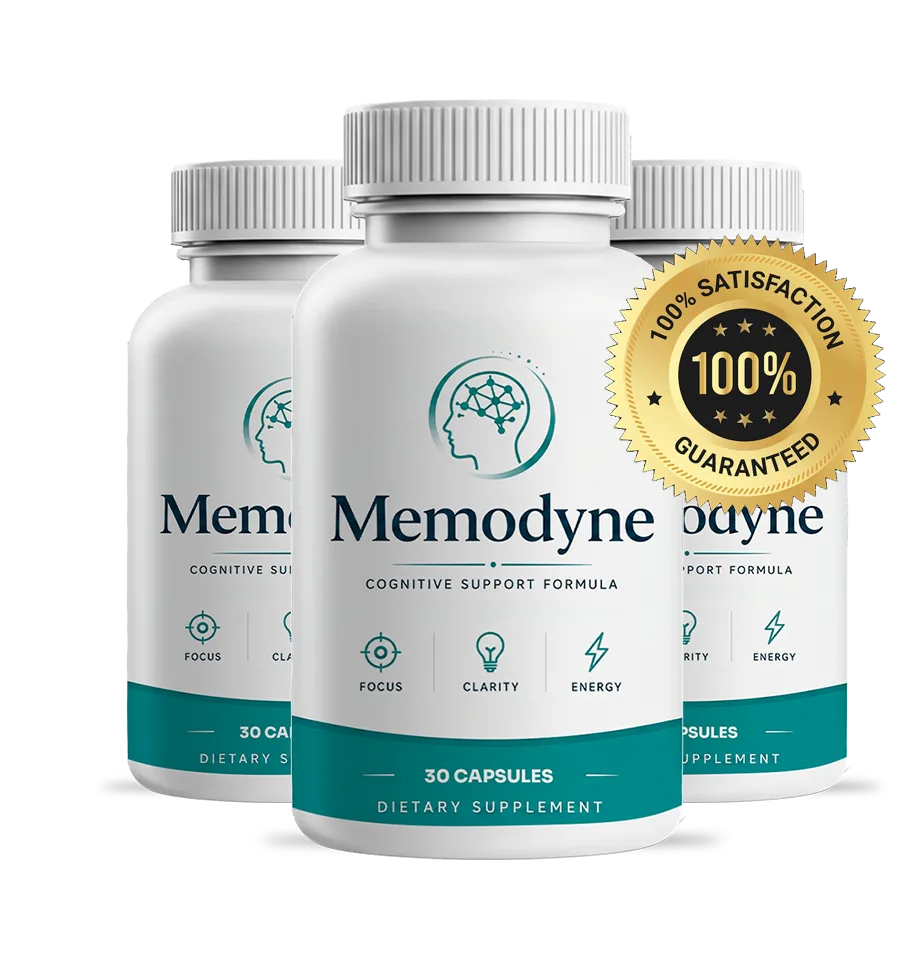
- L-Arginine and L-Arginine AKG (2:1) — the direct raw material for nitric oxide.
- L-Citrulline HCl and L-Citrulline Malate — the steady route that keeps arginine levels topped up for hours.
- Niacin (B3) — supports cellular energy production so the delivered fuel gets used.
- Beta-Alanine — rounds out the formula with antioxidant support.
- Stimulant-free — no jitters, no crash, no conflict with your coffee or your sleep.
One capsule a day with breakfast. Bundles on the official website range from $49 to $79 per bottle, with free shipping on the 3- and 6-bottle packages, and every order is covered by a 60-day money-back guarantee, long enough to answer question 8 for yourself. The only small catches: it is sold only on the official site, and the benefits build over a few weeks rather than overnight.
Frequently asked questions
What does nitric oxide actually do in the brain?
Nitric oxide is a short-lived signaling gas your body makes on demand. In blood vessels it tells the smooth muscle to relax, so the vessel widens and more blood flows through. In the brain it also acts as a messenger between nerve cells and is involved in the processes behind learning and memory. Its best-understood everyday job is keeping the brain’s blood supply flexible and responsive.
Does nitric oxide production decline with age?
Yes. The body’s ability to produce nitric oxide tends to fall gradually with age, and blood vessels become a little stiffer. That is one reason circulation-focused habits such as walking, nitrate-rich vegetables and arginine or citrulline supplements become more popular after 40.
Does mouthwash really lower nitric oxide?
Part of your nitric oxide comes from a pathway that depends on friendly bacteria in the mouth converting nitrate from vegetables into nitrite. Strong antibacterial mouthwashes can wipe out those bacteria for a while and have been shown to blunt that pathway. If you rely on beets and greens for nitric oxide, rinsing with antiseptic mouthwash right after eating works against you.
Can I take a nitric oxide supplement if I have high blood pressure?
Ask your doctor first. Nitric oxide helps blood vessels relax, so arginine or citrulline supplements can add to the effect of blood pressure medicine, nitrates and erectile dysfunction drugs. Many people with well-controlled blood pressure do use them, but it should be a decision made with your prescriber, not on your own.
How long does it take to notice a nitric oxide supplement?
Arginine and citrulline are absorbed within hours, but the everyday benefits people describe, such as a steadier afternoon and feeling less sluggish after sitting, usually build over a few weeks of daily use. A 60-day money-back guarantee, like the one on Memodyne, is long enough for a fair trial.
Is Memodyne a stimulant?
No. Memodyne contains no caffeine or other stimulants. It supplies L-Arginine, L-Citrulline, niacin and beta-alanine to support the body’s own nitric oxide production, so it pairs easily with your morning coffee and will not interfere with sleep.
The bottom line
Nitric oxide is the quiet signal behind your brain’s blood supply. It fades gradually with age, rises with vegetables and movement, dips with antiseptic mouthwash, and responds to arginine and citrulline over weeks of daily use. Check with your doctor if you take blood pressure or heart medicine. Then make the habit simple enough to keep, which for us means Memodyne: one stimulant-free capsule with breakfast. Keep reading with blood flow and memory, or visit the Memodyne overview.