The short answer
The easiest way to eat for brain blood flow is to put nitrate-rich vegetables (arugula, spinach, beets, celery) and citrulline-rich watermelon on your plate every day, alongside garlic, nuts and colorful fruit. Below are six simple ideas, one for each part of the day, made with everyday grocery-store ingredients. Food builds the foundation; for a steady daily dose of the same nitric oxide raw materials, the formula we recommend is Memodyne.
Your brain is a small organ with a big appetite. It uses a large share of the oxygen and fuel your body takes in, and all of it arrives through the bloodstream. That is why so much of our writing on this site comes back to one idea: healthy blood flow supports a clear head. We explain the science in blood flow and memory.
One of the molecules that keeps blood vessels relaxed and open is nitric oxide. Your body makes it from two main routes: the amino acids L-arginine and L-citrulline, and the dietary nitrate found in vegetables. The good news is that you can feed both routes at the table without any special recipes. This guide gives you six ideas you can actually use this week.
Why these foods fit (in one minute)
- Nitrate-rich vegetables such as arugula, spinach, lettuce, celery and beets. Friendly bacteria in your mouth turn nitrate into nitrite, and your body can then turn nitrite into nitric oxide.
- Citrulline-rich foods, with watermelon as the best-known example. The body converts citrulline into arginine, which feeds nitric oxide production over several hours.
- Supporting players such as garlic, pomegranate, citrus, nuts and seeds, which bring antioxidants, healthy fats and other nutrients that suit a heart-healthy eating pattern.
Small studies make the link interesting: researchers at Wake Forest found that older adults who ate a high-nitrate breakfast with beet juice showed more blood flow to parts of the frontal lobes on brain scans. That is a promising signal, not a guarantee, and it fits a simple rule: eat your greens and beets often.
The 6 meal ideas
1. Breakfast: spinach and feta scramble with orange slices
You need: 2 eggs, a big handful of baby spinach, a little crumbled feta, olive oil, black pepper and an orange.
Why it fits: Spinach is one of the richest everyday sources of nitrate, and wilting it into eggs is the easiest way to eat a large handful before 9 a.m. The orange adds vitamin C and a fresh, sweet finish. It is also a natural moment to take your daily capsule with food.
2. Smoothie: beet, berry and banana blend
You need: 1 small cooked beet (vacuum-packed beets from the produce aisle are perfect), a cup of frozen mixed berries, half a banana, a spoon of plain yogurt and water or milk.
Why it fits: Beets bring nitrate, berries bring color and antioxidants, and the banana and yogurt make it creamy and filling. It is an easy way to enjoy beets if you do not love them on a plate. We compare beet juice and capsules in beet juice vs a nitric oxide supplement.
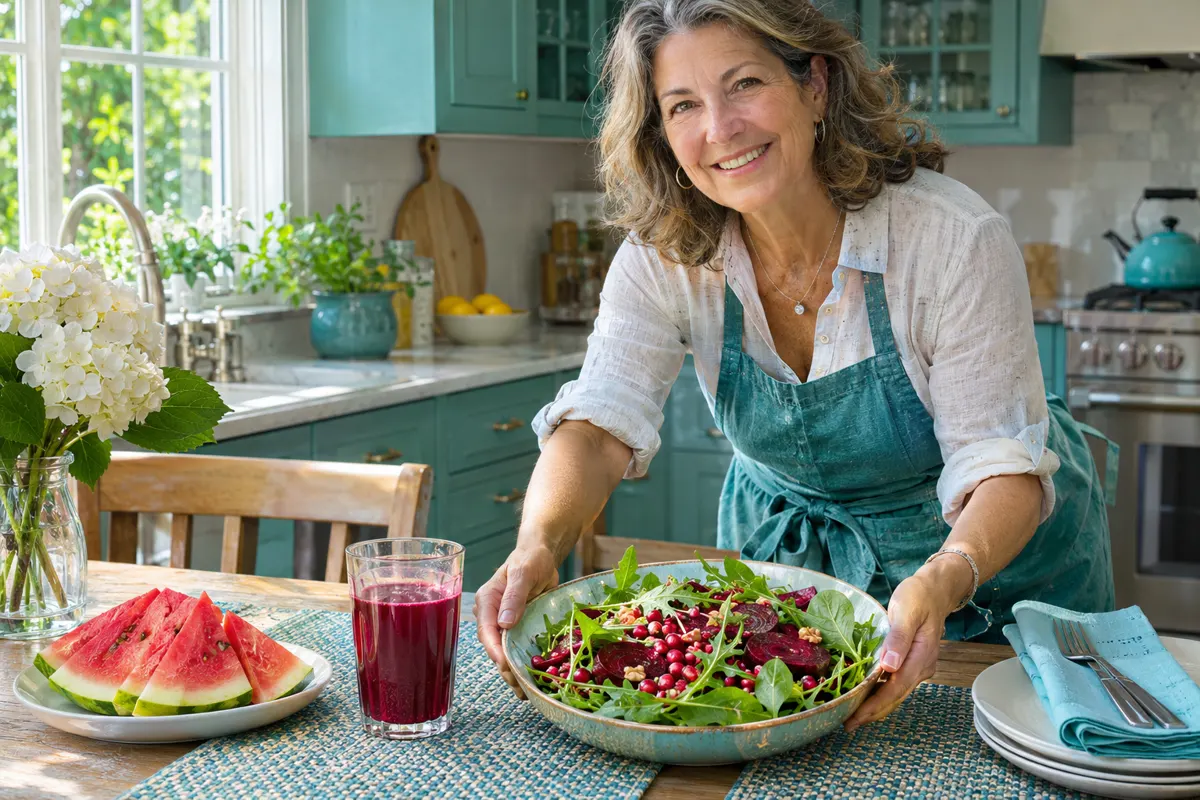
3. Lunch: arugula, roasted beet and walnut salad
You need: 2 big handfuls of arugula, sliced roasted beets, a few walnuts, goat cheese or chickpeas, and a dressing of olive oil, lemon juice and a pinch of salt.
Why it fits: Arugula is often listed as one of the highest-nitrate greens, and it pairs naturally with beets. Walnuts add healthy fats and crunch. Make a double batch of roasted beets on Sunday and lunch is ready in five minutes all week.
4. Snack: watermelon cubes with mint and pistachios
You need: A bowl of watermelon cubes (fresh, or frozen cubes when it is out of season), a few torn mint leaves and a small handful of pistachios.
Why it fits: Watermelon is the best-known food source of L-citrulline, the same amino acid used in nitric oxide supplements. It is also mostly water, which helps with hydration, a quiet driver of afternoon fog (see can dehydration cause brain fog?). Pistachios add protein so the snack keeps you going.
5. Dinner: salmon with garlicky greens and quinoa
You need: A salmon fillet, a bunch of Swiss chard or kale, 2 cloves of garlic, olive oil, lemon and a scoop of quinoa or brown rice.
Why it fits: Sauteed chard or kale adds another serving of greens, garlic brings flavor and is a classic part of heart-healthy cooking, and salmon provides omega-3 fats that suit a brain-friendly diet. It is a 25-minute weeknight dinner that covers several bases at once.
6. Drink: beet and lime spritzer or pomegranate sparkling water
You need: A small splash of beet juice or 100% pomegranate juice, sparkling water, a squeeze of lime and ice.
Why it fits: It feels like a treat, keeps juice portions small and adds to your daily fluids. It is a good swap for a sugary soda in the afternoon or a cocktail at a holiday party.
Your week at a glance
| Moment | Idea | Key food | Main route |
|---|---|---|---|
| Breakfast | Spinach and feta scramble | Spinach | Nitrate |
| Morning | Beet, berry and banana smoothie | Beets | Nitrate |
| Lunch | Arugula, beet and walnut salad | Arugula, beets | Nitrate |
| Afternoon | Watermelon, mint and pistachios | Watermelon | Citrulline |
| Dinner | Salmon with garlicky greens | Chard or kale | Nitrate |
| Anytime | Beet or pomegranate spritzer | Beet or pomegranate juice | Nitrate and hydration |
You do not need all six every day. Two or three of them, most days, is a realistic and very good goal.
Small tips that make these ideas work better
- Go fresh and varied. Nitrate levels differ between vegetables and harvests, so rotating greens is smarter than relying on one.
- Keep it practical. Pre-washed greens, vacuum-packed beets and frozen fruit are just as useful as fancy produce.
- Pair food with movement. A walk after lunch or dinner is the other half of good circulation; our list of daily habits for brain blood flow shows how to stack them.
- Mind the extras. Watch the salt in dressings and cheese and keep juices to small glasses.
Who should be careful
These are everyday foods that most people can enjoy freely. A few notes: people with a history of kidney stones may be told to limit high-oxalate foods such as spinach and beets; pink urine after beets is harmless for most people; and if you take blood pressure medicine, blood thinners, nitrates or ED drugs, talk to your doctor before adding large amounts of beet juice or any nitric oxide supplement. None of these meals is a treatment for any condition, and new or worsening memory problems deserve a visit to your doctor.
Where a daily formula fits
Real life gets in the way of the perfect salad. Busy days, travel and holiday weeks mean fewer greens and more takeout. That is exactly where a daily nitric oxide formula like Memodyne earns its place: it delivers L-arginine and L-citrulline in one capsule, so the pathway gets steady support whether or not lunch went to plan.
Our recommendation: Memodyne
If you like the idea of eating for brain blood flow, Memodyne is the daily formula we recommend to keep that same pathway topped up. Think of it as the reliable base under your meals: one small capsule a day, stimulant-free and easy to keep going.
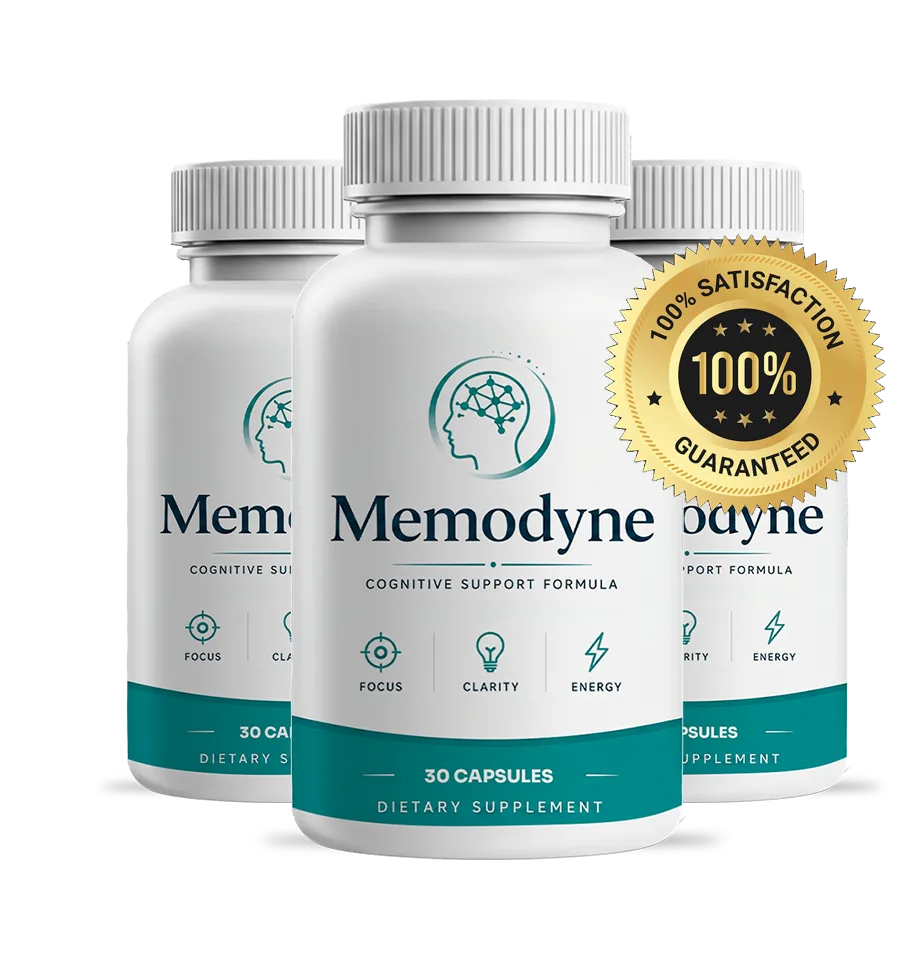
- L-Arginine and L-Arginine AKG (2:1) — the direct raw material the body turns into nitric oxide.
- L-Citrulline HCl and L-Citrulline Malate — the same amino acid found in watermelon, in a steady, concentrated daily dose.
- Niacin (B3) — supports cellular energy production.
- Beta-Alanine — rounds out the formula with antioxidant support.
- Stimulant-free — no jitters, so it fits any time of day.
Bundles on the official website range from $49 to $79 per bottle, with free shipping on the 3- and 6-bottle packages. Every order is covered by a 60-day money-back guarantee. The only small catches: it is sold only on the official site, and the benefits build over a few weeks of daily use. If you take blood pressure medicine, nitrates or ED drugs, check with your doctor first.
Frequently asked questions
What foods boost nitric oxide naturally?
Leafy greens such as arugula, spinach and lettuce, along with beets, celery and cabbage, are rich in dietary nitrate, which the body can turn into nitric oxide. Watermelon provides L-citrulline, another raw material for nitric oxide, and foods like garlic, pomegranate, nuts and seeds round out a circulation-friendly plate.
Which vegetable has the most nitrates?
Arugula (rocket), spinach, lettuce, celery and beets are among the richest sources of dietary nitrate. Amounts vary with how and where the vegetables are grown, so the simplest approach is to eat a variety of leafy greens and beets regularly.
Can food improve blood flow to the brain?
A healthy diet supports healthy blood vessels, and small studies have found that a high-nitrate meal or beet juice increased blood flow to parts of the brain in older adults. Food works best as part of an overall routine with regular movement, sleep and healthy blood pressure.
Is it normal for urine to turn pink after eating beets?
Yes. Pink or reddish urine or stools after eating beets, called beeturia, is common and harmless for most people. If you see red color without having eaten beets, talk to your doctor.
Who should be careful with nitrate-rich foods?
Most people can enjoy these foods freely. People with a history of kidney stones may need to limit high-oxalate foods such as spinach and beets, and anyone taking blood pressure medicine, blood thinners, nitrates or ED drugs should ask their doctor before adding large amounts of beet juice or nitric oxide supplements.
Do I still need a supplement if I eat these foods?
Food is the foundation. A daily nitric oxide supplement such as Memodyne simply adds a consistent, concentrated dose of L-arginine and L-citrulline on the days your meals fall short, which is why we recommend pairing the two.
The bottom line
Eating for brain blood flow is simpler than it sounds: greens and beets for nitrate, watermelon for citrulline, plus garlic, nuts and colorful fruit. Pick two or three of these six ideas most days, keep moving and drink enough water. For steady daily support of the same nitric oxide pathway, our recommendation is Memodyne. Visit the Memodyne overview or browse more articles on the blog.